Showing posts with label cancer. Show all posts

Monday, 31 December 2018

What will happen in Medicine in 2019

What will happen in medicine in 2019?


I believe this is a time of great change, where the cost of many treatments will be beyond the reach of both patients and governments, and a lot more "back to basics" therapies, which are probably just as effective, will return.

Cancer – our understanding of cancer, and the enormous expenditure on finding specific treatments for specific forms of cancer have lead to an explosion of new drugs. These are incredibly successful compared to previous therapies, but how are we going to pay for them? Supplements and herbs such as turmeric, garlic, mistletoe, and others are becoming accepted by oncologists, and I believe that the ketogenic diet which starves the cancer cells of sugars will become 1st line treatment.

Heart disease – over recent years there has been an explosion of angioplasty and stents for all forms of angina, but many studies have shown that only in cases of unstable or uncontrolled angina are these any better than medical treatment. Many predict that the number of stents being inserted will drop dramatically. High doses of fish oils (greater than 2 to 3 g a day) have been proven to be beneficial, as well as regular gentle exercise, and Coenzyme Q10. Interestingly around the world the incidence of heart attacks appears to be dropping.

Diabetes – drug treatments and diets have all been unsuccessful in reducing the incidence of the horrible side-effects of this disease. The ketogenic diet with or without intermittent fasting can virtually cure type 2 diabetes, and with great care can also be helpful in type I. (I'm writing a booklet on this which will be available in the next few months).   Gastric bypass surgery will also become more available.

Alzheimer's disease – the incidence of this continues to rise, and we really don't know why. The ketotic diet, or taking ketone supplements does seem to improve the symptoms, and some have suggested that intermittent fasting might help clear the nerve cells of the buildup of amyloid tissue which seems to cause the condition.

With drugs are becoming increasingly expensive, health professionals are beginning to look back towards the benefits of lifestyle, diet and supplemental treatment, leaving the introducing drug treatment as late as possible.

Sunday, 11 November 2018

Omega-3 fish oils reduce heart disease, vitamin D and fish oils do not seem to affect cancer.


At the recent American Heart Association and Congress of Cardiology, two very important studies were presented. The first (VITAL) trial followed 26,000 people over five years, some had vitamin D, some had fish oils (1 g daily), some have both and some have none. They looked at the incidence of cancer, and also cardiovascular events which they described as heart attacks, strokes and heart deaths. The conclusion was that there was no significant benefit from either vitamin D or fish oils, however, when they looked at just heart disease (and removed stroke) there was a 30% reduction in heart attack and heart deaths. (Because this was not prespecified, and was called a subgroup analysis, people are saying this is a negative trial!)

At the same meeting, the REDUCIT trial was published, with 3 g of fish oils taken daily, and in the study there was a 25% reduction in heart attack, cardiac events and death. This was incredibly significant (p<00000005), even more so because many of these people were already on full medical management including statin drugs.

It is amazing how the profession does its best to ignore complementary treatments, but I don't think there is any doubt now that omega-3 fish oils, provided it is quality oil (mercury free and pure) and taken an adequate doses does make an enormous difference to people with heart disease, or more importantly people at risk of heart disease. It is such an easy and innocuous preventive treatment, particularly when compared with most of the drugs we have available.
I believe that everybody at risk of heart disease or with disease should be taking 3 g of omega-3 fish oils per day.

Monday, 3 September 2018

Should we be taking aspirin

Should we be taking aspirin?


Even though doctors have been recommending patients to take aspirin for many decades, there is still considerable uncertainty on whether we should be making this recommendation, and if so to whom, and what dose?

A recent study suggested that perhaps when people were larger they needed more aspirin, rather than the conventional dose of 100 mg. Two large papers coming from Europe (one involving more than 15,000, and the other more than 12 a half thousand people) have fortunately clarified the situation and confirmed that 100 mg is fine. (More greatly increases the risk of stomach bleeding, with little or no benefit). Large and small people should all take the same dose (100mg).

Primary prevention – people with no evidence of heart disease, we don't have enough evidence to suggest that this is beneficial, and the risk of stomach bleeding is far greater than any possible benefit. Sadly the studies do not confirm that aspirin has any benefit in preventing cancer. Conclusion - don't take aspirin as a preventative.

Those at higher risk – i.e. people with diabetes or family history, again we don't have enough evidence to suggest that this is necessary or beneficial.

People with established heart disease – the data suggests that taking aspirin does reduce the risk of further heart events by about 12%, and I don't think is any doubt that unless there is some contraindication, people who have angina or a heart attack, had angioplasty or bypass surgery should be taking 100 mg of aspirin.  There is a slight increase in the risk of bleeding (usually from the stomach of between 0.5 and 0.9%)

Thursday, 11 January 2018

Supplements and Cancer

Supplements which can help cancer.

I was recently asked by a patient's specialist to justify the supplements I suggested he could take to help in his fight against cancer.
I thought I might place the answer here on my blog as well:

In response to your doctor's letter re the value of supplements and cancer:
It is important to remind people, especially the medical profession, of reality. Requesting "need to justify this advice with clear evidence from medical literature for the use and the client scenario", suggests that "conventional medical treatment" has passed through the same rigorous process, whereas we know this is not true. For example in writing an editorial in the British medical Journal, Dr Richard Smith the editor states "only about 15% of medical interventions are supported by solid scientific evidence….This is because only 1% of the articles in medical journals are scientifically sound and partly because many treatments have not been assessed at all." (British Medical Journal, 1991:303:798) The vast majority of papers written to support the value of drugs are either initiated by, sponsored by or paid for by the pharmaceutical industry manufacturing the drug, and in many cases the articles are ghostwritten by the pharmaceutical industry. Fortunately these days the situation is improving as people are realising just what has happened in the past. As far as the newer anti-cancer treatments are concerned, and to some extent the older ones, the pharmaceutical industry is deeply involved in the studies and reports.
It has been quoted that to do a study that would be acceptable, costs about $2 million dollars, making it extremely unlikely that most nonpharmaceutical therapies will ever have "acceptable" scientific evidence, no matter how effective they are.

So accepting that the scientific evidence behind many drug treatments is poor, and the same can be said for complimentary therapies, the logical answer is to use what appears to be scientifically and logically the best therapies for the individual patient.

Having said that, I would like to justify my recommendations for additional treatment for your patient:

I believe that he should be being treated with what is potentially beneficial, should do little harm, and would not interfere with current medical therapy.

Optimal nutrition – Undergoing chemotherapy is an arduous time, and I don't think anybody would restrict the food intake of a cancer patient, with the possible exception of high levels of sugars. Unfortunately chemotherapy does blunt the appetite, may possibly affect absorption, and certainly makes it more difficult to receive all that the body requires. Many physicians suggest the patient should graze rather than have 3 large meals per day. It thus seems logical to add a quality multivitamin and multi mineral supplement to provide complete nutrition.
In addition to the chemotherapy and radiotherapy, the body's immune system is a major if not the major component in suppressing and hopefully killing the cancer. To optimise its function the immune system needs optimal nutrition.

While it is possible to provide supplements individually, it does seem much more logical to take a single multivitamin and multi mineral tablet.
Just to comment on a few of the contents of a multivitamin and multi mineral:
selenium – this has been shown to have anti-cancer effects in animals and also humans, and in the Arizona study (Journal of the American Medical Association 1996, December 24) of 1300 patients, half receiving supplementary selenium and half not, those taking selenium over 6 years have a 63% reduction in prostate cancer, and a 50% reduction in cancer deaths.. These deaths suggest that many of the patient's had cancer before they started selenium.
Multivitamins – In the women's health nurses study, women who took multivitamin tablets for more than 15 years reduce the risk of developing: a number of other cancers by between 50 and 70% (Annals of Internal Medicine 1998, October: 517)
Individual vitamins – while there is some cloud over vitamin A and beta-carotene in large doses, the B vitamins have many beneficial effects in patients receiving chemo. For example it is highly likely that B12 and folic acid would be beneficial in reducing the incidence or severity of peripheral neuropathy very common with chemotherapy, vitamin C is an antioxidant and given intravenously does seem to have anti-carcinogenic effects, but even orally in the production of collagen it is likely to be beneficial in strengthening the tissues and maybe even reducing spread.
Vitamin D has been postulated in many cases is having anti-cancer effects, (https://www.ncbi.nlm.nih.gov/pmc/articles/PMC1470481/) unfortunately the amount of vitamin D allowed in tablets in this country are less than desirable, but nevertheless the amount of a good multivitamin tablet must have some beneficial effect.
Vitamin E is an antioxidant, provided it is not given in high doses which could potentially or theoretically affect chemotherapy, can reduce the side-effects of chemotherapy, as well as protecting the body from free radicals. Vitamin K has also been suggested as having anti-cancer effects .

As far as minerals concern, we have discussed the trace element selenium, but it is very likely that other minerals might also be beneficial in the routine amount found in a normal diet, which is what a multivitamin should be providing. Magnesium for example does relax smooth muscle, and can reduce cramps and possibly some of the other peripheral effects common in patients with chemotherapy and also cancer.

While it is possible for all of these to be achieved by taking the products individually, taking one or 2 good multi tablets a day does seem to be logical and practical.


Lycopene found in tomatoes this does appear to have a beneficial effect on prostate cancer, and the Harvard University study (Journal of the National Cancer Institute, 6th of March 2002, page 291) of 47,000 health professionals followed over 12 years those eating 4 to 7 servings of tomato sauce per week had 20% less prostate cancer, those having 10 servings per week had 45% less. This does suggest that lycopene has a beneficial effect upon the prostate, and it is likely to also be beneficial in the presence of cancer.
Lycopene is often taken with saw palmetto which is helpful for benign prostatic hypertrophy.  We do not know if it has and effect  on prostate cancer (but in animals it can increase the sensitivity of prostate cells to radiation.(
https://www.mskcc.org/cancer-care/integrative-medicine/herbs/saw-palmetto)

Omega-3 fish oils are known to have numerous effects from the cardiovascular system through to the nervous system and are considered an essential oil. Eating a lot of fish will provide this, but usually provides a dose of mercury which in cancer patients would be undesirable. There is a small study in Sweden involving 11,000 men which showed a 2 to 3 fold increase in prostate cancer in those men who did not eat fish (Lancet 2001; 2 June: 1764) in addition it may also be beneficial in the peripheral nervous effect and other effects of chemotherapy.

Melatonin – this hormone is created in the pineal gland, and is very helpful for sleep, a problem often difficult in cancer patients. Apart from this beneficial effect, in the United States nurses study, those nurses who work night shifts (who are likely to have low doses of melatonin) for more than 30 years, had a 37% higher incidence of cancer, and in the review of 10 randomised trials (Journal of pioneer research, 2005, November, 39 (4): 360 to 6). Involving 643 patients, cancer patients given melatonin in high doses (10 to 40 mg at night, reduce the risk of death at 1 year by 34%.

Coenzyme Q 10 – one of the most debilitating symptoms of both cancer and particularly chemotherapy is the crashing fatigue which they develop. Coenzyme Q 10 which essentially carries the energy from the mitochondria in the cell to the nerves and myofibrils, may help with this. It certainly has been shown to improve energy in many other situations.

Turmeric or curcumin has been shown to have anticancer properties in animal studies some of them quite spectacular.  These are reviewed (http://www.cancerresearchuk.org/about-cancer/cancer-in-general/treatment/complementary-alternative-therapies/individual-therapies/turmeric) and although there are no blinded studies, many people (including oncologists) believe that this product is a useful adjuvant to chemotherapy and other cancer treatments.,

Milk Thistle this contains a number of compounds including Silymarin.   It has been shown to directly destroy prostate cancer cells and slow their growth, as well as increase the sensitivity of cancer cells to some forms of chemotherapy (http://www.cancerresearchuk.org/about-cancer/cancer-in-general/treatment/complementary-alternative-therapies/individual-therapies/milk-thistle-and-liver-cancer).

Frankincense – derived from boswellia tree has strong anti-inflammatory actions, and may possibly be beneficial in cancer, probably best put on the skin as aromatherapy.  Its uses are reviewed here (https://www.medicalnewstoday.com/articles/314366.php).


Low dose naltrexone – I am certainly no expert on this, but it is a very interesting development, and is being used by many of my colleagues. Naltrexone is used to assist patients coming off opioids and alcohol. This is usually at the dose of 50 mg and above. It works by blocking the opioid receptors. Low dose naltrexone (usually 0.5 to 1.5 mg taken at night blocks the receptors overnight. It is believed that this up regulates the receptor  sensitivity, and possibly even increases the number of receptors. During the day following this, the normal endorphans and similar hormones are thus potentially more active. This can reduce pain, and other symptoms without any obvious adverse effects. LDN is used in a number of situations including multiple sclerosis, lupus, inflammatory bowel disease, chronic fatigue syndrome , fibromyalgia, restless leg syndrome and depression. It has been suggested from animal studies  that it may also suppress tumour growth, although the mode of action has yet to be established. (Biochemical pharmacology 67, number 7 (April 2001: 7792786.)
While I would have no way suggest to Stephen that LDN is essential for his cancer, it might possibly reduce some side-effects symptoms.

As mentioned in my opening paragraph, the evidence for many therapies is not strong for the scientists, but in the situation where we are doing our best for our patients, logical therapies combined with Hippocrates "1st do no harm" philosophy is what most doctors try and practice.
In Stephen's case he has not been well served by the profession, he is very likely to get side-effects from both the cancer and the chemotherapy, and the above supplemental recommendations potentially may help him, but given in physiological doses, will do him no harm.


I would like to stress again that we need to be supporting our bodies a great deal more than we currently do.   Our immune system and body's defences have been ignored in much of our current medical therapies.

Saturday, 11 November 2017

Dr, will I feel better ? 
Bringing the patient into the decision making process..


Until relatively recently, (and in many cases still recently), doctors have had an arrogance in their approach to advising patients – "trust me I know best". However with Google and other online advice, in many cases patients know a great deal more than the doctors over their specific condition.
In addition much of the advised that most doctors give is based on so-called blinded clinical trials – where the outcome in disease progress, repeat heart attacks etc., and mortality are the basis of their advice to their patients.

It is exciting to see that doctors are now looking at quality of life, and how the patient benefits and feels in them selves, rather than the hard end points of disease and death.
This is especially important in the treatment of cancer - "does having unpleasant chemo which may extend life for some weeks or months, really what is best for the patient and their relatives"," is having this major operation worthwhile,"– in medicine we tend to have the attitude of "if there is something we can do, we usually do it".
Unfortunately also private medicine there is the additional impact of financial remuneration for the doctor and the institution which we must do our utmost to exclude.

It is interesting now in cardiology they are also looking at what is best for making the patient feel better, even if not necessarily for longer. In a publication in the American College of cardiology, they reviewed quality of life comparing angioplasty and bypass surgery and although bypass surgery was possibly slightly better long-term benefit, in many cases the patient would prefer angioplasty rather than the recovery process of a major operation.

In the meantime I think it is important for patients to demand their rights, and asked the doctors for a genuine opinion, if I go ahead with this procedure, is it actually going to make me feel better?

Thursday, 2 November 2017

Another benefit of aspirin – cancer prevention.


There is much debate on the value of the humble aspirin, and decade ago it was suggested that everybody over the age of 40 should be taking an aspirin tablet, it does seem to reduce the risk of heart disease and strokes but slightly increases the risk of bleeding, and currently most people believe that only those with definite heart disease or stroke should be taking it.
But a recent presentation from China suggests that aspirin might reduce the risk of cancer.
They followed over 600,000 people for 7 years, and those taking aspirin long-term had a 47% lower risk of liver and oesophageal cancer, 30%  of gastric cancer, 34% pancreatic cancer and 24% less leukaemia and colon cancer. (click here)
These are fairly spectacular numbers, I think the study needs to be repeated and analysed more before we recommend people take aspirin to prevent cancer, but certainly it gives another potential benefit from taking this drug.   Perhaps those with a family history of these forms of cancer could consider taking a small dose (100mg) daily with food.   Its only real risk is to increase the risk of bleeding, and that risk is very small.

Sunday, 30 October 2016

Possible benefits of glutathione in the elderly


Glutathione is a very powerful antioxidant created within the body to prevent oxidative damage due to free radicals attacking and destroying cells. With age the amount of glutathione in the body particularly the brain decreases, and could set the stage for age-related health problems, particularly dementia, but also cardiovascular disease, diabetes and cancer.

Unfortunately glutathione cannot effectively be given as a supplement because it is poorly absorbed, but N-acetylcysteine (NAC) is converted into glutathione, and also helps the body to make more glutathione.
It is difficult in humans to trial this, but in a rather nice study (click here) the authors gave NAC to isolated liver cells in both young and old rats exposed to high levels of oxidants.  N-acetylcysteine was very protective and reduce the amount of damage greater than twofold.

Oxidative stress does appear to be a major cause of disease in today's world; antioxidants taken orally are relatively weak compared to the antioxidants created within the body (glutathione, catalase, superoxide dismutase etc.). The production of the latter tends to be less as we get older, and are frequently overwhelmed by our toxic world. It thus does seem reasonable to suggest that people should take products which could help the creation of these internal antioxidants, such as N-acetylcysteine.

Saturday, 2 January 2016

Medicine in 2016 - a Happy New Year?


2016 looks like becoming a very important year in the development of medicine. Over the last few years people have been looking more critically at the direction of modern medicine, at the way in which it has been driven by procedures and drugs, and questioning whether the cost of modern medicine is sustainable and is providing the benefits that are claimed.

 I can see huge changes in the two major killers in today's world – cancer and heart disease.

Cancer – in the past chemotherapy has been blunderbuss essentially damaging the most rapidly dividing cells which are assumed to be the cancer cells but at the same time knocking off any rapidly dividing normal cells in the body as well – giving the well-known side-effects. In recent years however much more selective chemotherapies have been developed which target the cancer cells specifically, giving much fewer side-effects, but more importantly a much better outlook. Unfortunately because the selective drugs are only applicable to selective cancers, the number of patients receiving them are relatively small, and thus it is difficult for the drug firms to recoup their research costs. This makes them extremely expensive, and insurance companies and Governments are going to have to decide which ones to fund, and for how long. While this is a real problem, it does give a real opportunity for quality and increased duration of life for many cancer patients. Example of these drugs include treatments for melanoma, myeloma, lung cancer, prostate cancer, pancreatic cancer and others.
Thus the diagnosis of even widespread cancer no longer needs be seen as a death sentence as it has in the past.

Heart disease – this has tended to be the pinup boy of medicine over the last couple of decades, as doctors have discovered bypass surgery, angioplasty and stenting. The same time the pharmaceutical industry has come up with a variety of drugs both to treat symptoms and to try and reduce the incidence of heart disease.  .
There has been a very strong emphasis on lowering cholesterol, and even though only one of the cholesterol-lowering drugs that have ever been shown to reduce heart disease (the statins),
The emphasis on cholesterol has continued, but more and more conventional doctors are looking critically at the evidence and the advice we have been giving to our patients in the past. By telling people not to eat fat, we have forced them into eating food containing lots of carbohydrates, which is led to an obesity epidemic. Doctors are now looking at whether we should be giving statins as frequently as we are recommending -for most doctors there is no debate - patients with definite heart disease should be on statins, their value in other situations is very debatable, in fact dubious.
People are also looking at the benefits of angioplasty which is being done every time doctors see what appears to be a significant lesion in a coronary artery. The evidence appears that only lesions that are symptomatic should be treated, and there is very little evidence that stenting any
lesion actually reduces the risk of heart attack or death. Over the forthcoming years, I suspect the number of angioplasty procedures will drop significantly.

Because of the increased cost of effective cancer treatments, I suspect that governments and insurance bodies may well be looking more closely at all other procedures, and confirm that they are value before funding them.

But perhaps the most frightening aspect of health which has the prospects of returning us to the Middle Ages is the development of drug resistant bacteria which could render most of our antibiotics impotent. Because of the speed of development of resistance, and the cost of developing new forms of antibiotics, the drug industry is unlikely to be spending a great deal of money on this problem.

Tuesday, 28 April 2015

Vitamin C and infections

Vitamin C is one of the most powerful weapons in treating disease – from scurvy, to infections and cancer. It is almost completely ignored by the conventional medical profession - which is a tragedy.
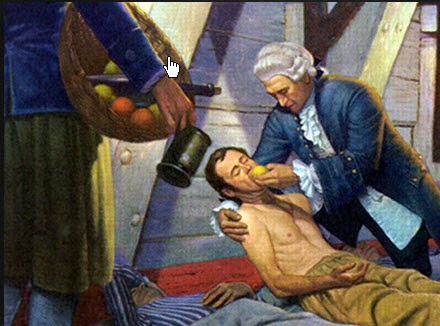
Most of us know about scurvy and how it killed more sailors than other diseases and battles, and was simply cured by giving sailors lemons or limes.
When the vitamin C level in many patients in hospital, particularly those who are seriously ill is measured, it is often near scurvy levels, and because vitamin C is essential for holding the cells together, maintaining the immune system, fighting infections and cancer, and many other functions, one wonders how many patients in intensive
care and hospital beds do not recover simply because of low vitamin C levels. (In hospital they regularly measure electrolytes, kidney and liver function etc – but never vitamin C levels!)

I have had personal experience and seen the benefit of intravenous vitamin C, or even high dose oral vitamin C in patients with infection and cancer, it provides enormous hope for people with cancer, especially advanced disease. I will write about this in a later blog, but I felt the article below written by one of the world authorities on vitamin C (Dr Thomas Levy) is worth sharing with the rest of the world. The more people who know about the value of this essential vitamin and its potential use in many diseases, the more rapidly conventional medicine and doctors will start introducing into their treatment regimes.

Is the healing power of Vitamin C too good to be true? Can this inexpensive and convenient vitamin improve and heal the toughest of ailments? 
by Thomas E. Levy, MD, JD
My ongoing relationship with vitamin C now spans a full 20 years, when I first