Showing posts with label supplements. Show all posts

Monday, 31 December 2018

What will happen in Medicine in 2019

What will happen in medicine in 2019?


I believe this is a time of great change, where the cost of many treatments will be beyond the reach of both patients and governments, and a lot more "back to basics" therapies, which are probably just as effective, will return.

Cancer – our understanding of cancer, and the enormous expenditure on finding specific treatments for specific forms of cancer have lead to an explosion of new drugs. These are incredibly successful compared to previous therapies, but how are we going to pay for them? Supplements and herbs such as turmeric, garlic, mistletoe, and others are becoming accepted by oncologists, and I believe that the ketogenic diet which starves the cancer cells of sugars will become 1st line treatment.

Heart disease – over recent years there has been an explosion of angioplasty and stents for all forms of angina, but many studies have shown that only in cases of unstable or uncontrolled angina are these any better than medical treatment. Many predict that the number of stents being inserted will drop dramatically. High doses of fish oils (greater than 2 to 3 g a day) have been proven to be beneficial, as well as regular gentle exercise, and Coenzyme Q10. Interestingly around the world the incidence of heart attacks appears to be dropping.

Diabetes – drug treatments and diets have all been unsuccessful in reducing the incidence of the horrible side-effects of this disease. The ketogenic diet with or without intermittent fasting can virtually cure type 2 diabetes, and with great care can also be helpful in type I. (I'm writing a booklet on this which will be available in the next few months).   Gastric bypass surgery will also become more available.

Alzheimer's disease – the incidence of this continues to rise, and we really don't know why. The ketotic diet, or taking ketone supplements does seem to improve the symptoms, and some have suggested that intermittent fasting might help clear the nerve cells of the buildup of amyloid tissue which seems to cause the condition.

With drugs are becoming increasingly expensive, health professionals are beginning to look back towards the benefits of lifestyle, diet and supplemental treatment, leaving the introducing drug treatment as late as possible.

Sunday, 2 September 2018

Should I throw away my fish oil supplements?

Should I throw away my fish oil supplements?
Not yet, not if you are taking the right dose or the right brand!

Three recent studies have thrown doubt among the population on the benefits of fish oils, despite many years of evidence from populations on the benefits from cardiovascular disease, rhythm problems and strokes. I have reviewed these below, but in summary, they have all used a low dose of fish oils, and the quality of the fish oils used is almost certainly suspect. Two trials did show a slight improvement in heart attacks and rhythm problems, and suggested that perhaps if a higher dose had been used the results may have been different.


The take-home message is yes use fish oils, they can do absolutely no harm, and if given in sufficient doses using a quality supplement, could make a major difference in heart attacks, strokes and rhythm problems.

Thursday, 11 January 2018

Supplements and Cancer

Supplements which can help cancer.

I was recently asked by a patient's specialist to justify the supplements I suggested he could take to help in his fight against cancer.
I thought I might place the answer here on my blog as well:

In response to your doctor's letter re the value of supplements and cancer:
It is important to remind people, especially the medical profession, of reality. Requesting "need to justify this advice with clear evidence from medical literature for the use and the client scenario", suggests that "conventional medical treatment" has passed through the same rigorous process, whereas we know this is not true. For example in writing an editorial in the British medical Journal, Dr Richard Smith the editor states "only about 15% of medical interventions are supported by solid scientific evidence….This is because only 1% of the articles in medical journals are scientifically sound and partly because many treatments have not been assessed at all." (British Medical Journal, 1991:303:798) The vast majority of papers written to support the value of drugs are either initiated by, sponsored by or paid for by the pharmaceutical industry manufacturing the drug, and in many cases the articles are ghostwritten by the pharmaceutical industry. Fortunately these days the situation is improving as people are realising just what has happened in the past. As far as the newer anti-cancer treatments are concerned, and to some extent the older ones, the pharmaceutical industry is deeply involved in the studies and reports.
It has been quoted that to do a study that would be acceptable, costs about $2 million dollars, making it extremely unlikely that most nonpharmaceutical therapies will ever have "acceptable" scientific evidence, no matter how effective they are.

So accepting that the scientific evidence behind many drug treatments is poor, and the same can be said for complimentary therapies, the logical answer is to use what appears to be scientifically and logically the best therapies for the individual patient.

Having said that, I would like to justify my recommendations for additional treatment for your patient:

I believe that he should be being treated with what is potentially beneficial, should do little harm, and would not interfere with current medical therapy.

Optimal nutrition – Undergoing chemotherapy is an arduous time, and I don't think anybody would restrict the food intake of a cancer patient, with the possible exception of high levels of sugars. Unfortunately chemotherapy does blunt the appetite, may possibly affect absorption, and certainly makes it more difficult to receive all that the body requires. Many physicians suggest the patient should graze rather than have 3 large meals per day. It thus seems logical to add a quality multivitamin and multi mineral supplement to provide complete nutrition.
In addition to the chemotherapy and radiotherapy, the body's immune system is a major if not the major component in suppressing and hopefully killing the cancer. To optimise its function the immune system needs optimal nutrition.

While it is possible to provide supplements individually, it does seem much more logical to take a single multivitamin and multi mineral tablet.
Just to comment on a few of the contents of a multivitamin and multi mineral:
selenium – this has been shown to have anti-cancer effects in animals and also humans, and in the Arizona study (Journal of the American Medical Association 1996, December 24) of 1300 patients, half receiving supplementary selenium and half not, those taking selenium over 6 years have a 63% reduction in prostate cancer, and a 50% reduction in cancer deaths.. These deaths suggest that many of the patient's had cancer before they started selenium.
Multivitamins – In the women's health nurses study, women who took multivitamin tablets for more than 15 years reduce the risk of developing: a number of other cancers by between 50 and 70% (Annals of Internal Medicine 1998, October: 517)
Individual vitamins – while there is some cloud over vitamin A and beta-carotene in large doses, the B vitamins have many beneficial effects in patients receiving chemo. For example it is highly likely that B12 and folic acid would be beneficial in reducing the incidence or severity of peripheral neuropathy very common with chemotherapy, vitamin C is an antioxidant and given intravenously does seem to have anti-carcinogenic effects, but even orally in the production of collagen it is likely to be beneficial in strengthening the tissues and maybe even reducing spread.
Vitamin D has been postulated in many cases is having anti-cancer effects, (https://www.ncbi.nlm.nih.gov/pmc/articles/PMC1470481/) unfortunately the amount of vitamin D allowed in tablets in this country are less than desirable, but nevertheless the amount of a good multivitamin tablet must have some beneficial effect.
Vitamin E is an antioxidant, provided it is not given in high doses which could potentially or theoretically affect chemotherapy, can reduce the side-effects of chemotherapy, as well as protecting the body from free radicals. Vitamin K has also been suggested as having anti-cancer effects .

As far as minerals concern, we have discussed the trace element selenium, but it is very likely that other minerals might also be beneficial in the routine amount found in a normal diet, which is what a multivitamin should be providing. Magnesium for example does relax smooth muscle, and can reduce cramps and possibly some of the other peripheral effects common in patients with chemotherapy and also cancer.

While it is possible for all of these to be achieved by taking the products individually, taking one or 2 good multi tablets a day does seem to be logical and practical.


Lycopene found in tomatoes this does appear to have a beneficial effect on prostate cancer, and the Harvard University study (Journal of the National Cancer Institute, 6th of March 2002, page 291) of 47,000 health professionals followed over 12 years those eating 4 to 7 servings of tomato sauce per week had 20% less prostate cancer, those having 10 servings per week had 45% less. This does suggest that lycopene has a beneficial effect upon the prostate, and it is likely to also be beneficial in the presence of cancer.
Lycopene is often taken with saw palmetto which is helpful for benign prostatic hypertrophy.  We do not know if it has and effect  on prostate cancer (but in animals it can increase the sensitivity of prostate cells to radiation.(
https://www.mskcc.org/cancer-care/integrative-medicine/herbs/saw-palmetto)

Omega-3 fish oils are known to have numerous effects from the cardiovascular system through to the nervous system and are considered an essential oil. Eating a lot of fish will provide this, but usually provides a dose of mercury which in cancer patients would be undesirable. There is a small study in Sweden involving 11,000 men which showed a 2 to 3 fold increase in prostate cancer in those men who did not eat fish (Lancet 2001; 2 June: 1764) in addition it may also be beneficial in the peripheral nervous effect and other effects of chemotherapy.

Melatonin – this hormone is created in the pineal gland, and is very helpful for sleep, a problem often difficult in cancer patients. Apart from this beneficial effect, in the United States nurses study, those nurses who work night shifts (who are likely to have low doses of melatonin) for more than 30 years, had a 37% higher incidence of cancer, and in the review of 10 randomised trials (Journal of pioneer research, 2005, November, 39 (4): 360 to 6). Involving 643 patients, cancer patients given melatonin in high doses (10 to 40 mg at night, reduce the risk of death at 1 year by 34%.

Coenzyme Q 10 – one of the most debilitating symptoms of both cancer and particularly chemotherapy is the crashing fatigue which they develop. Coenzyme Q 10 which essentially carries the energy from the mitochondria in the cell to the nerves and myofibrils, may help with this. It certainly has been shown to improve energy in many other situations.

Turmeric or curcumin has been shown to have anticancer properties in animal studies some of them quite spectacular.  These are reviewed (http://www.cancerresearchuk.org/about-cancer/cancer-in-general/treatment/complementary-alternative-therapies/individual-therapies/turmeric) and although there are no blinded studies, many people (including oncologists) believe that this product is a useful adjuvant to chemotherapy and other cancer treatments.,

Milk Thistle this contains a number of compounds including Silymarin.   It has been shown to directly destroy prostate cancer cells and slow their growth, as well as increase the sensitivity of cancer cells to some forms of chemotherapy (http://www.cancerresearchuk.org/about-cancer/cancer-in-general/treatment/complementary-alternative-therapies/individual-therapies/milk-thistle-and-liver-cancer).

Frankincense – derived from boswellia tree has strong anti-inflammatory actions, and may possibly be beneficial in cancer, probably best put on the skin as aromatherapy.  Its uses are reviewed here (https://www.medicalnewstoday.com/articles/314366.php).


Low dose naltrexone – I am certainly no expert on this, but it is a very interesting development, and is being used by many of my colleagues. Naltrexone is used to assist patients coming off opioids and alcohol. This is usually at the dose of 50 mg and above. It works by blocking the opioid receptors. Low dose naltrexone (usually 0.5 to 1.5 mg taken at night blocks the receptors overnight. It is believed that this up regulates the receptor  sensitivity, and possibly even increases the number of receptors. During the day following this, the normal endorphans and similar hormones are thus potentially more active. This can reduce pain, and other symptoms without any obvious adverse effects. LDN is used in a number of situations including multiple sclerosis, lupus, inflammatory bowel disease, chronic fatigue syndrome , fibromyalgia, restless leg syndrome and depression. It has been suggested from animal studies  that it may also suppress tumour growth, although the mode of action has yet to be established. (Biochemical pharmacology 67, number 7 (April 2001: 7792786.)
While I would have no way suggest to Stephen that LDN is essential for his cancer, it might possibly reduce some side-effects symptoms.

As mentioned in my opening paragraph, the evidence for many therapies is not strong for the scientists, but in the situation where we are doing our best for our patients, logical therapies combined with Hippocrates "1st do no harm" philosophy is what most doctors try and practice.
In Stephen's case he has not been well served by the profession, he is very likely to get side-effects from both the cancer and the chemotherapy, and the above supplemental recommendations potentially may help him, but given in physiological doses, will do him no harm.


I would like to stress again that we need to be supporting our bodies a great deal more than we currently do.   Our immune system and body's defences have been ignored in much of our current medical therapies.

Monday, 1 January 2018

Dr Gerald's Website

Visits in the last week
www.drgeraldlewis.com is being used by lay people, patients and doctors from around the world.  On the site Dr Gerald has listed most of today's diseases, briefly describes the condition then

Tuesday, 18 April 2017


These headlines are NOT TRUE - 

Always read the small print in supplement trials!

The results of 2 recent trials have caused international headlines – claiming multivitamins do not work nor does vitamin D.
This information actually comes from 2 studies which are far from conclusive.

Multivitamins and heart disease – this is a huge study (in part funded by Pfizer) looking at doctors in the United States aged 50 years and over. 13,316 doctors were either given multivitamins (Centrum Silver) or dummy tablets and followed for 13 years. Their conclusions was slightly strange – "there was no consistent evidence of various foods, nutrients, dietary patterns or multivitamins on cardiovascular disease in points. However there were statistically significant interactions between multivitamins and B6 and heart attacks, multivitamins and vitamin D on cardiovascular mortality, and multivitamins and B12 on cardiovascular and total mortality." Then commented however that these patterns were inconsistent, and thus ignore them. They also concluded that future studies are needed.
This is not the message that the public have received.

Questions that could be asked:
1. Doctors on the whole eat well if not perfectly, and are probably the least likely populations needing multivitamins.
2. Is Centrum the best multivitamin to recommend?
3. They did show benefits on heart attacks, heart and total deaths, why did they chose to ignore them?

The 2nd study is equally puzzling, it comes from a New Zealand group studied the benefits of vitamin D and heart disease. Just over 5000 people were in this general practice study, half received monthly vitamin D 100,000iu and the other half dummy tablets for 3 years. This appeared to have no effect on cardiovascular disease. They concluded "this result does not support the use of monthly vitamin D supplements, the effects of daily or weekly supplementation requires further study."
Again this is not the message that has been publicised.
Questions that could be asked:
1. Is 3 years ready long enough to have an effect?
2. The quality of general practitioner studies is often patchy.
3. Were we ever designed to receive 100,000 international units of vitamin D monthly? This equates to 71 tablespoons of cod liver oil or 19 L of milk drunk on the 1st of the month, and then none for 30 days!

Once again the publicity against supplements shows very biased reporting.

Sunday, 27 November 2016

Phytochemicals


Phytochemicals 
These are chemicals from plants (phyto is Greek for plant)  Polyphenols, phytochemicals, flavanols, bioflavonoids etc are names which cause a lot of confusion.

Polyphenols:
The most studied class of phytochemicals are polyphenols because of their potential health benefits. There are numerous polyphenols (poly means many, phenols means benzene rings) which come from different plants and have different actions. 
  • Phenolic acids – blueberries, tea, cereal grains.
  • Stilbenes – the best known of these as resveratrol found in red wine, it is quite poorly absorbed.
  • Lignans are found in flaxseed which may have some oestrogenic properties.
  • Flavonoids (also called bioflavonoids) are named for the yellow colour and are found in flowering plants and fruit and vegetables. Flavonoids cause the colour and taste of foods, and have an antioxidant effect on fat, vitamins and enzymes.
    Flavonoids are divided into 6 subclasses many of which have confusingly similar names:
    • Flavonols – found in onions, curly kale, leeks, broccoli blueberries, red wine and tea. Its production stimulated by sunlight and so its highest concentration is in the outer parts of the plants.
    • Flavones - are found in parsley and celery
    • Flavanones - are found in citrus fruits, tomatoes, and plants such as mint.
    • Isoflavones - these have a structure similar to oestrogen, and are often called phytoestrogens. Most are made from soy and soy products.
    • Flavanols - these are found in green tea, chocolate, red wine, apricots and other fruit. Also in fruits such as grapes, peaches and berries, and also cause the bitterness of chocolate.
    • Anthocyanins - . These are pigments creating the blue purple red and pink colours of 4 hours fruits and vegetables.

Many variables affect the amount of polyphenols found in food, including the degree or ripeness at harvest, the rainfall, the sun exposure, how they are stored and how they are cooked.The polyphenols are designed to protect plants from oxidation, toxins and damage, and by consuming them, we can achieve some of these benefits.
The still is quite a lot of scepticism in conventional medicine on their value when taken the supplements, although there is no debate that we should all be eating plenty of fresh fruit and vegetables on a regular basis. The difficulty is to obtain polyphenols that have been growing correctly, picked at the right time, not over processed or over cooked and are available all year round. For this reason a quality supplement which is well absorbed containing these products should also be beneficial, but does not replace the need for fresh fruit and vegetables as well.


Sunday, 1 May 2016

Fish oil and baby brain development

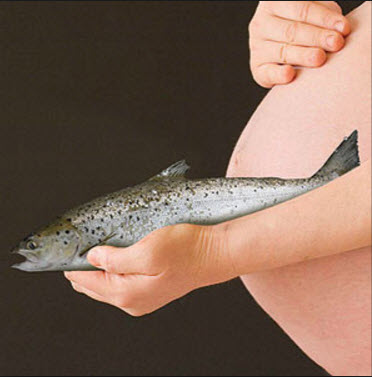
High fish consumption during pregnancy gives brain benefits to the child.

Yet another study showing the benefits of taking supplements during pregnancy. In the Spanish study 2000 mothers were questioned, and their babies were assessed at 14 months and 5 years. Click here
On average the women consumed about 500 g (3 servings) of seafood per week while pregnant, but for every additional 10 g per week above that amount the children's test scores improved up to about 600 g.   The improvement in brain development and neuropsychological testing was most evident at 5 years, and there was also a consistent reduction in autism.

This is a population with a fairly high fish intake, they did not separate between small and large fish.   The larger fish tend to have higher mercury levels. Even despite this, the babies benefited consistently.

The omega-3 oils found in fish are obviously very important for the foetus's brain development and studies like this make it mandatory for doctors and midwives to encourage pregnant women, especially in the 1st trimester, to eat plenty of omega-3 oils. At the same time the possibility of mercury toxicity causing damage to the developing fetus is a worry, and it is recommended that the larger fish with longer life spans which concentrate the mercury more in the tissues (shark, swordfish, giant mackerel, tuna) should be avoided.
However the safest way of making certain that the baby receives the omega-3 oil and zero mercury is to take a quality supplement which is guaranteed to be mercury free.

The fact that we can create a more intelligent, better adapted child with a lower risk of autism by simply taking a quality omega-3 supplement during pregnancy and eating regular fish meals is something that should be shared with all mothers and potential mothers.

Monday, 2 March 2015

Low vitamin D levels doubles size of a stroke

Low levels of Vitamin D double the size of a stroke.

In a paper presented at the International Stroke Conference 2015,  studied 96 patients after strokes – those with low vitamin D levels (<30ng/ml) had MRI evidence of brain damage TWICE that of those with higher Vitamin D levels (17 vs 8 mls).  The ‘poor 90 day outcome score’ was also doubled in those with low vitamin D levels.
Neurologists are seriously looking at checking vitamin D levels, but this is really after the horse has bolted.   Other studies which have shown low vitamin D levels increase cardiovascular risk, double the risk of having a stroke, increase risk of hip fracture post stroke – it does seem logical to maintain adequate vitamin D levels, and the only guaranteed way to achieve this is with supplementation.  
As you will see with this and subsequent posts, there are many good scientific and proven reasons why in today’s world we need to supplement our diet to enable our bodies to function the way they were designed to.   Until, we start doing this, from childhood all through life, then the disastrous direction that health is going, will continue unabated.