Statin drugs cause osteoporosis! OVER 300%
We keep hearing from much of the medical literature about how wonderful the statin drugs are, and their potential benefits and a number of diseases, in addition of course to coronary artery disease. The evidence for coronary artery disease is reasonably strong, and I think most medical practitioners would recommend that patients with known coronary artery disease should be on at least a low dose of statin.
What we have been very good at doing is ignoring the obvious effects that statin drugs may be having on other systems of the body. The statins block the production of a number of hormone cascades which eventually lead to cholesterol. We have ignored the other branches, such as the development of coenzyme Q (essential for energy), the production of oestrogen, testosterone and other steroid hormones, all of which are affected by the statins.
We now have an extremely damning article published online in the annals of rheumatic diseases (click here) who reviewed all the data in Austrians younger than 90 years of age – nearly 80 million of them, from January 2000 to December 2007, the found over 300,000 who are taking statin drugs and in those they found over 11,000 people with osteoporosis.
These were compared with the control group of 7.5 million patients who were not treated statins, 69% which were diagnosed with osteoporosis.
Putting this together those patients taking statin drugs had three times the incidence (300%) of developing osteoporosis. This was dose-dependent - the higher the dose of statin, the greater the osteoporosis incidence. This is almost certainly due to an effect of the statin drugs on oestrogen and testosterone. If you then go even further start looking at the effects of lowering testosterone and oestrogen what they do to the sex life, health, growth etc. menopausal changes the potential damage they could be doing is huge.
Statin drugs are not innocuous, unless used when it is necessary, i.e. those people known or extremely high risk of coronary artery disease.
If you would like further information or consult with me, discuss this or any other medical matter I can be contacted online – geraldlewis@zoho.com
Showing posts with label hormones. Show all posts
Showing posts with label hormones. Show all posts
Friday, 18 October 2019

Wednesday, 25 March 2015
Managing menopause symptoms
Managing the symptoms of menopause
Menopause occurs in most women between the ages of 45 and 55 years. For some it causes few problems, but for others it can make life extremely miserable. Interestingly in Asian countries where there is a high intake of soy and other phyto-oestrogens, menopause is rarely a problem. These people mainly eat fermented soy which may be different and healthier than most soy products on our shelves.At menopause the normal female hormone cycles (oestrogens and progesterone) shut down, and particularly the lack of oestrogens cause symptoms of hot flushing, sleeplessness, palpitations and others.
Why do they happen?
 The hot flushes (flashes in American English) are probably due to the lack of oestrogen. This affects the thermoregulatory nerves in the hypothalamus which keep our temperature within a very narrow range. The sudden absence of oestrogen makes the hypothalamus much more sensitive, and instead of waiting until the core temperature rises 0.4°C above normal, the hypothalamus starts to dissipate heat from the body at a much lower temperature. This starts with a hot flushing feeling in the chest and face which spreads around the body – due to dilation of the small arteries – to try and lose heat. This is then followed by sweating and frequently palpitations. Sometimes these are followed by chills and shivering as the body temperature has been lowered. When this happens at night it frequently disturbs sleep.
What can we do about it?
Stop the body temperature from rising particularly suddenly, keep the room temperature low use fans etc, wear clothes in layers which can be removed easily.
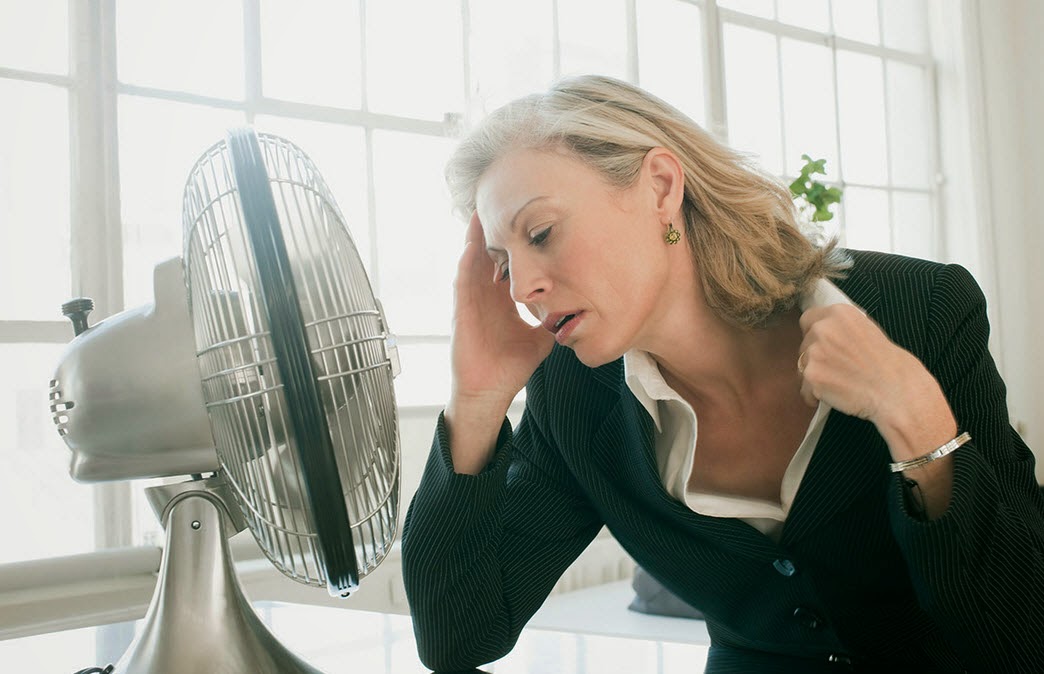 Avoid triggers such as spicy food, stressful situations, caffeine, alcohol, cigarette smoke, tight clothes and possibly sugar (especially sweet food at night).
Complimentary (natural) treatments –
- Soy and soy products, also grains, brown rice, tofu, nuts contain a variety of compounds which can help.
- Isoflavones and phytooestrogens (plant oestrogens) – such as
Subscribe to:
Posts (Atom)