Tuesday, 28 April 2015

Vitamin C and infections

Vitamin C is one of the most powerful weapons in treating disease – from scurvy, to infections and cancer. It is almost completely ignored by the conventional medical profession - which is a tragedy.
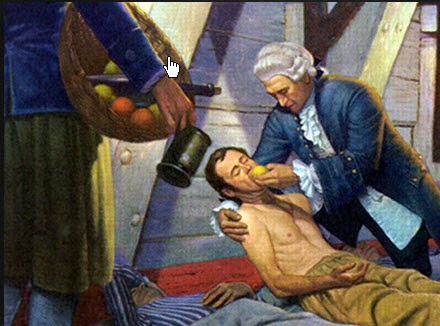
Most of us know about scurvy and how it killed more sailors than other diseases and battles, and was simply cured by giving sailors lemons or limes.
When the vitamin C level in many patients in hospital, particularly those who are seriously ill is measured, it is often near scurvy levels, and because vitamin C is essential for holding the cells together, maintaining the immune system, fighting infections and cancer, and many other functions, one wonders how many patients in intensive
care and hospital beds do not recover simply because of low vitamin C levels. (In hospital they regularly measure electrolytes, kidney and liver function etc – but never vitamin C levels!)

I have had personal experience and seen the benefit of intravenous vitamin C, or even high dose oral vitamin C in patients with infection and cancer, it provides enormous hope for people with cancer, especially advanced disease. I will write about this in a later blog, but I felt the article below written by one of the world authorities on vitamin C (Dr Thomas Levy) is worth sharing with the rest of the world. The more people who know about the value of this essential vitamin and its potential use in many diseases, the more rapidly conventional medicine and doctors will start introducing into their treatment regimes.

Is the healing power of Vitamin C too good to be true? Can this inexpensive and convenient vitamin improve and heal the toughest of ailments? 
by Thomas E. Levy, MD, JD
My ongoing relationship with vitamin C now spans a full 20 years, when I first

Tuesday, 21 April 2015

What to do when you have a heart attack

What to do when you have a heart attack


What happens:
One in three of us will die of heart disease, and although becoming slightly less common, a heart attack remains the major cause of death.With a heart attack a fat laden plaque in a coronary artery ruptures, causing a clot which blocks the artery. This can lead to a number of consequences:
1. Chest pain – a tight heavy feeling in the chest, throat, left or right arm,

2. Breathlessness, sweating, faintness and a feeling of being generally unwell frequently happen.
3. The heart can sometimes beat irregularly, causing palpitations, sometimes it can stop or beat in an uncoordinated fashion (ventricular fibrillation), leading to sudden death.

Speed is of the essence - both to reduce the amount of heart damage long term, and also reduce the risk of sudden death.   In the cardiology literature - "minutes mean muscle', ie the longer the delay, the more heart damage occurs. 
If we can dissolve the clot in the artery rapidly (less than 30 minutes) no damage is done at all. However there is benefit up to 6 hours, some believed 12 hours. However at any stage a cardiac arrest can occur, which is why the patient needs to be in a cardiac unit or close to a defibrillator as fast as possible.

While doctors can do –
1. Dissolve the clot with drugs given intravenously (thrombolysis). 
2. Remove the clot and open up the arteries in the cardiac catheter lab – angioplasty and stenting.
3. If the heart goes into fibrillation, this can easily be reversed with a defibrillator. These are routinely present in ambulances, places where people congregate (sports stadium, airports, shopping malls) and of course cardiac units.

What you can do
1. Get to a cardiac unit (or ambulance) as soon as possible.
Call the ambulance using the emergency number (111, 999, 911) and say you have chest pain.
2. Sit down quietly and relax, if you feel faint lie down flat.
3. Chew one aspirin tablet (300 mg) slosh it round the mouth and then swallow it. This prevents the clot in the artery getting bigger.
4. If you have one, use your Nitrolingual spray one or two puffs every five minutes.
5. If you have some available, take some chewable magnesium or liquid magnesium (500 – 1000 mg), and 1000 mg of omega-3 fish oil. Both of these can  reduce the risk of cardiac arrest.


8 year survival curves, shortest delay (top) to slowest (bottom)
A recent study from the Netherlands has shown that in 3000 patients with a heart attack, the 30 day mortality was 2.6% in those with the shortest delay in reaching hospital catheter lab (mean 72 minutes), compared to 7.4% in those with the longer delay (160 minutes).   Five year mortality was also reduced from 22.6% in those with the longer delay to 12.8% in the shortest delay. 

So - getting to hospital as fast as possible saves lives in both the short and longer term.  DO NOT DELAY, don't worry about a false alarm or being a nuisance, any chest pain lasting more than 10 minutes, call an ambulance!

Thursday, 16 April 2015

Trans Fats - dangerous from conception

More evidence against trans fats:

New studies show that babies whose mothers ate trans fats while pregnant become more hyperactive and have more psychiatric like problems such as mania.They also have memory problems and poor reaction to stress. 
While the babies of mothers who ate fish oil (omega 3
polyunsaturated oils) had the reverse effect - they were emotionally stable, had no memory problems and reacted well to stress.  
This is because the oils are incorporated into the brain cells of these babies.   
We know that trans fats cause heart disease, but the effect on unborn babies is frightening. 

So what are trans fats and why do we use them?
Fats are a chain of carbon atoms - each is attached to 1 or 2 hydrogen atoms
Saturated fats - every carbon has 2 hydrogen atoms - this creates a straight compound which can pack tightly together and so can form solid fats ( cheese, butter, cream).
Mono unsaturated fats - one carbon pair only has 1 hydrogen (arrow), this makes the molecule curved and so liquid (nut, seed and some vegetable oils - especially olive oil)
Poly unsaturated fats - a number of carbon pairs have only 1 hydrogen - but always on the same side, and again these are liquids (fish oils, walnut, flax seed). 
These are all natural fats.
However food manufacturers have created trans fats, where the hydrogen atoms of an unsaturated fat are on each side of the
carbons (arrow), and this straightens the molecule out, enables them to pack together and become solid.  These give the food extra long shelf life and they go rancid much later.  To do this the fats are exposed to high temperatures and chemical solvents - some of which remain in the fat.  These and the shape of the molecule make them toxic to the body - leading to diseases. 

Margarines, spreads and many processed foods and cookies contain trans fats.  You can tell from the label stating trans fats or partially hydrogenated oils (which are trans fats).


So for the sake of you and your children, stay clear of these toxic products - especially when pregnant or breast feeding.   You will have a happier baby - it's worth it!

Tuesday, 7 April 2015

Amazing results of CoQ10 in heart failure

Why are we not using CoEnzyme Q10 in heart failure?

CoQ10 is like power lines
CoEnzyme Q10 (CoQ10) is essential for transporting energy in the cell as well as a powerful antioxidant.   Energy created by burning sugars and fat in the mitochondrial 'furnaces' in the cell requires CoQ10 to transfer this energy to the muscle fibers, much like power lines take electricity from the power station to factories.  As we age our production of COQ10 drops, and heart failure and statin drugs further lower the levels.    Early trials of CoQ10 in heart failure had mixed results, possibly because low doses of CoQ10 were used and the numbers in the trials were small.

The recently published Q Symbio trial however showed a shattering benefit which should have resulted in headlines throughout the world and made CoQ10 a mandatory therapy for all patients with heart failure - but it has been almost universally ignored. Is it because it is classified as a supplement and cannot be patented or sold by drug companies?
Countries involved
The trial was conducted in 17 European, Asian and Australian countries, in over 400 patients with moderate to severe heart failure, given either CoQ10 100mg three times/day or placebo (dummy tablets) and followed for 2 years. The results were staggering - cardiovascular mortality was reduced from:  (16% in placebo to 9%) in the CoQ10 patients, all cause mortality (18% vs 10%) and hospital admissions (14% vs 7%).
We have no drug that can reduce events and mortality by almost 50%, and here is a safe treatment which had fewer side effects that the placebo which does just that!
Major cardiac events over time
In my view it is almost unethical not to offer this treatment to our heart failure patients!
Heart failure is a major problem in cardiology today, because we are able to treat heart disease with drugs and procedures, and most patients end up with heart failure.   In this study 90% of patients were receiving ACE inhibitors and 75% on beta blockers so they were receiving the best that modern medicine could offer, and yet CoQ10 almost halved their mortality and hospital admissions. 
This study can be placed beside a Swedish study in elderly people - where over 400 people over 70 were given either placebo or a combination of CoQ10 and selenium for 5 years.   Those on the active treatment had a much lower cardiovascular mortality 5.9% vs 12.6% in the placebo group. 
Maybe everyone over 70 years should consider taking CoQ10, and certainly those with heart disease. 

Wednesday, 25 March 2015

Managing menopause symptoms

Managing the symptoms of menopause

Menopause occurs in most women between the ages of 45 and 55 years. For some it causes few problems, but for others it can make life extremely miserable. Interestingly in Asian countries where there is a high intake of soy and other phyto-oestrogens, menopause is rarely a problem.  These people mainly eat fermented soy which may be different and healthier than most soy products on our shelves. 
At menopause the normal female hormone cycles (oestrogens and progesterone) shut down, and particularly the lack of oestrogens cause symptoms of hot flushing, sleeplessness, palpitations and others.
Why do they happen?
The hot flushes (flashes in American English) are probably due to the lack of oestrogen. This affects the thermoregulatory nerves in the hypothalamus which keep our temperature within a very narrow range. The sudden absence of oestrogen makes the hypothalamus much more sensitive, and instead of waiting until the core temperature rises 0.4°C above normal, the hypothalamus starts to dissipate heat from the body at a much lower temperature. This starts with a hot flushing feeling in the chest and face which spreads around the body – due to dilation of the small arteries – to try and lose heat. This is then followed by sweating and frequently palpitations. Sometimes these are followed by chills and shivering as the body temperature has been lowered. When this happens at night it frequently disturbs sleep.
What can we do about it?
Stop the body temperature from rising particularly suddenly, keep the room temperature low use fans etc, wear clothes in layers which can be removed easily.
Avoid triggers such as spicy food, stressful situations, caffeine, alcohol, cigarette smoke, tight clothes and possibly sugar (especially sweet food at night).

Complimentary (natural) treatments –

  • Soy and soy products, also grains, brown rice, tofu, nuts contain a variety of compounds which can help.
  • Isoflavones and phytooestrogens (plant oestrogens) – such as

Monday, 16 March 2015

folic acid reduces alzheimer's and stroke

Folic Acid supplements reduce strokes, Alzheimers and possibly heart disease


Folic acid is routinely given to  pregnant women to prevent neural tube defects ( spina bifida and hydrocephalus), and is routinely added to  many breads and other foods because it is deficient in many diets.  
 However despite the fact low folic acid can lead to:  Raised homocysteine which is associated with coronary artery disease, Depression, diabetes and some forms of cancer - trials of supplementing people with folic acid have been disappointing - with little benefit seen, but none have shown any adverse effects. 
A number of recent studies however suggest that taking folic acid supplements might be very beneficial:

  1. Reduced risk of Alzheimer's disease - in a study of  579 elderly non demented American men and women (click here) , those who took folic acid supplements had a 50% reduction in developing Alzheimer's in the subsequent 10 years. 
  2. Reduces risk of stroke in people with high blood pressure - a presentation at the 2015 American College of Cardiology reviewed the China Stroke Primary Prevention trial.  They followed for 4.5 years, over 20,000 men and women with high blood pressure, half were given the BP reducing agent enalapril, and half took an enalapril combination tablet containing 0.8mg of folic acid.   The addition of folic acid reduced the development of stroke by 21%.   
  3. May possibly reduce coronary heart disease.   In many trials using folic acid in patients with heart disease, aspirin was also given to the patients, and this may have a similar action to  folic acid and so mask any benefit from the folic acid. A London group reviewed 75 studies using folic acid (click here) in people with the MTHFR gene which raises homocysteine levels.  In the 5 trials with the lowest aspirin use, there was a 60% reduction in heart disease, but the 5 studies with the highest aspirin use, there was only a minimal insignificant benefit seen. 
So folic acid supplementation may reduce some cancers and coronary heart disease, but has now been shown to reduce the development of Alzheimer's disease and strokes (in people with high blood pressure).  

It does seem prudent  for everyone to take a good multivitamin supplement regularly that includes at least 0.5mg of  folic acid. 

Saturday, 14 March 2015

Mediterranean Diet is best

The Mediterranean is the best diet


There is enormous confusion about what is the best diet to follow - low fat, low saturated fat, low trans fat, low carb, high protein, paleolithic, fasting day diet....the list is endless.  Most are complicated and unpleasant to follow for the rest of one's life.    Unfortunately Cardiology has made saturated fat the sole culprit for many years and is having difficulty in saying "we got it wrong".   The diets usually concentrate on what you cannot eat rather than what you can.
Many cardiologists (me included) have for years suggested that the mediterranean diet is the best and healthiest, from looking at the incidence of heart disease in countries round the north Mediterranean shores.   Even though many smoke, drink, are overweight and do little exercise, the incidence of heart disease in those is incredibly low (see graph).  Arrows point to NZ, the UK and Australia, the bracketed countries are Portugal, Spain and France
They also eat saturated fat in the form of cheese, and some meat as well.   It seems that it is what you eat that is important, not necessarily what you 'should not'. 

In a paper presented to the American College of cardiology 2015, a Greek study followed 2,500 adults for 10 years.  those eating the typical mediterranean diet (rich in fresh fruit and vegetables, oil and fish) developed 47% less heart disease! That is HUGE - heart disease was halved by eating this very palatable diet. (It also reduced diabetes, obesity and blood pressure).

So what should we eat?
  • Avoid processed foods as much as possible (filled with trans fats), and also reduce the sugar intake, which is the major cause of today's obesity epidemic.  Moderation with salt and red meats.
  • Add the mediterranean foods : fresh fruits and vegetables, whole grains, beans, nuts, fish, olive oil and even a glass of red wine.     
That does not seem a hard diet to follow, in fact it is probably nicer than the ones we currently are trying to stick to.  Throw away all the diet books you have, none have been proven to be beneficial in the long run (even the low fat diet) - and here we have double proof with both population and trial evidence